By Nele Wallays, Director of Customer Experience, gategroup

For decades, aviation improved the passenger experience one touchpoint at a time: a faster check-in kiosk, a more comfortable seat, a better lounge or a more appealing meal.
Each improvement mattered. But passengers rarely experience them in isolation.
Today’s traveller moves through booking, ground transport, the airport, lounge, cabin and arrival with one device in hand. The smartphone has become the trip control centre, raising expectations that information and services should move seamlessly with the passenger.
IATA reports that 86% of passengers were satisfied with their travel experience in 2025. Yet expectations continue to rise for journeys that are faster, simpler and more connected.
Passengers do not experience booking, the airport and the cabin as separate business units. They experience one journey. The opportunity is to make every handover feel invisible and every choice intentional.
One journey, one digital thread

The next phase of passenger experience will not necessarily come from one breakthrough technology. It will come from connecting decisions and services that already exist.
A meal selected during booking should inform catering production, aircraft loading and cabin service. A disruption should update the flight, transfer, baggage status and relevant pre-orders. Loyalty should recognise the wider relationship with the passenger rather than only an individual transaction.
This is the connected passenger journey: a continuous digital thread beginning before departure and extending beyond arrival.
IATA’s 2025 Global Passenger Survey shows how quickly the smartphone is moving to the center of that journey. Seventy-eight per cent of passengers want one mobile experience bringing together a digital wallet, passport and loyalty credentials. Half have used biometrics during an airport journey, while 88% say real-time baggage tracking would make them more confident about travelling with checked luggage.
The implication goes beyond replacing paper with a screen. Passengers increasingly expect information, identity, payment, and service choices to move with them without repeatedly searching for updates or re-entering preferences.
Gen Z is an accelerator, not an exception
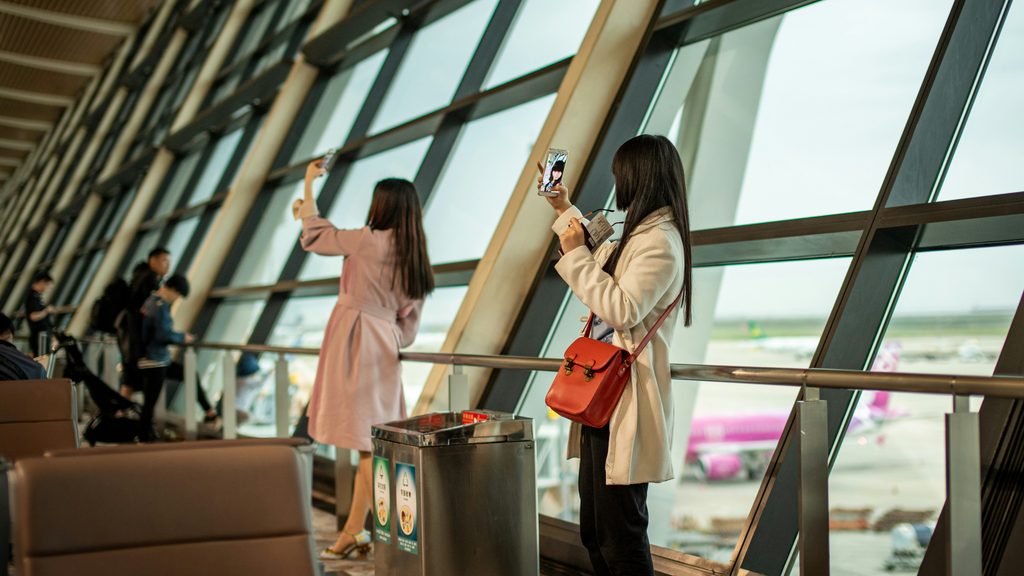
Gen Z is often presented as a completely different kind of traveller. That is too simplistic.
Ipsos cautions against reducing generations to easy stereotypes; behavior can be shaped by life stage, circumstance, and culture as much as age.
Even so, younger travelers are accelerating digital expectations. IATA found particularly strong interest among passengers under 25 in using smartphones for payment, identification, loyalty, and airport processes.
This generation has grown up with delivery tracking, ride-hailing, digital wallets, and immediate self-service. It brings similar expectations to aviation: visibility without repeated searching, choice without unnecessary queues and personalization without having to explain the same preference at every stage.
But once a service removes friction, its appeal quickly extends beyond one generation. What starts as a younger traveler’s expectation can soon become useful to families, frequent flyers, older passengers, and anyone traveling under pressure.
From concept to real-world service
Elements of this connected journey are already taking shape.
Delta Concierge, introduced through the Fly Delta app, provides selected customers with personalized information about flights, seats, gates, onboard services, loyalty benefits, and baggage. Future functions outlined by Delta include passport-expiry alerts, visa guidance, and weather-based travel preparation.
Digital identity is moving in the same direction. In 2026, IATA reported successful proofs of concept using wallet-based identity and biometric verification in live airline environments. One trial involving Air New Zealand allowed passengers to share identity information and service preferences during booking and check-in and move through participating touchpoints with fewer repeated document checks.
Baggage is becoming more visible too. What was once largely out of sight between bag drop and reclaim can increasingly be followed through airline notifications, RFID infrastructure, and location sharing.
The common thread is simple: passengers increasingly expect the journey to remember what has already happened and anticipate what comes next.
That expectation does not stop at the aircraft door.
Why food and hospitality belong in the same system
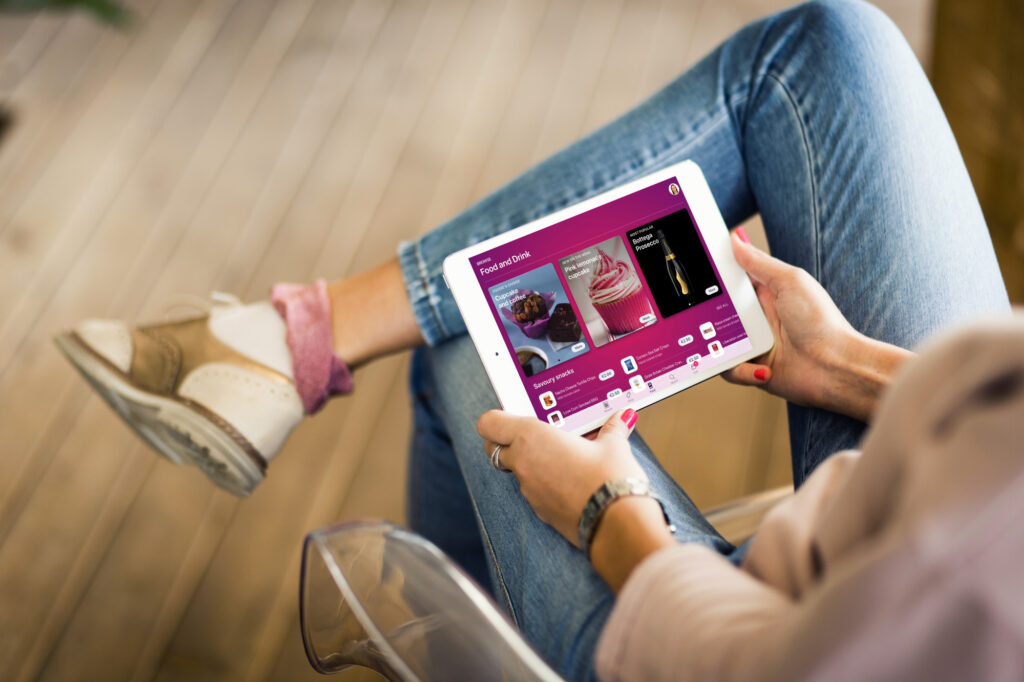
Onboard hospitality is one of the most tangible opportunities to make a connected journey feel genuinely personal.
Food, beverages, and retail are shaped by taste, culture, dietary requirements, time of day, and purpose of travel. They are also where digital information has to meet physical delivery.
A passenger pre-ordering a meal creates useful information long before the aircraft is loaded. When that signal flows through forecasting, production, and cabin service, it can give passengers greater confidence that their preferred choice will be available while helping airlines and caterers plan more precisely.
Connected retail can work in much the same way, extending choice beyond the physical trolley while giving crew better information at the point of service.
The opportunity lies in combining culinary expertise with passenger insight, trend intelligence, and operational reality. Data-led approaches to menu development can help translate emerging preferences into concepts that can be developed, tested and delivered at scale.
The integrated digital cabin ecosystem launched by Wizz Air, Immfly and gateretail offers one example. By connecting onboard retail, passenger connectivity, crew tools and operational data, the cabin becomes part of the wider digital journey rather than a disconnected interval between take-off and landing.
Personalisation, in this context, is not about giving passengers endless choice. It is about identifying the most relevant choice early enough — and ensuring it can actually be delivered.
The experience is only as good as the delivery
That distinction matters.
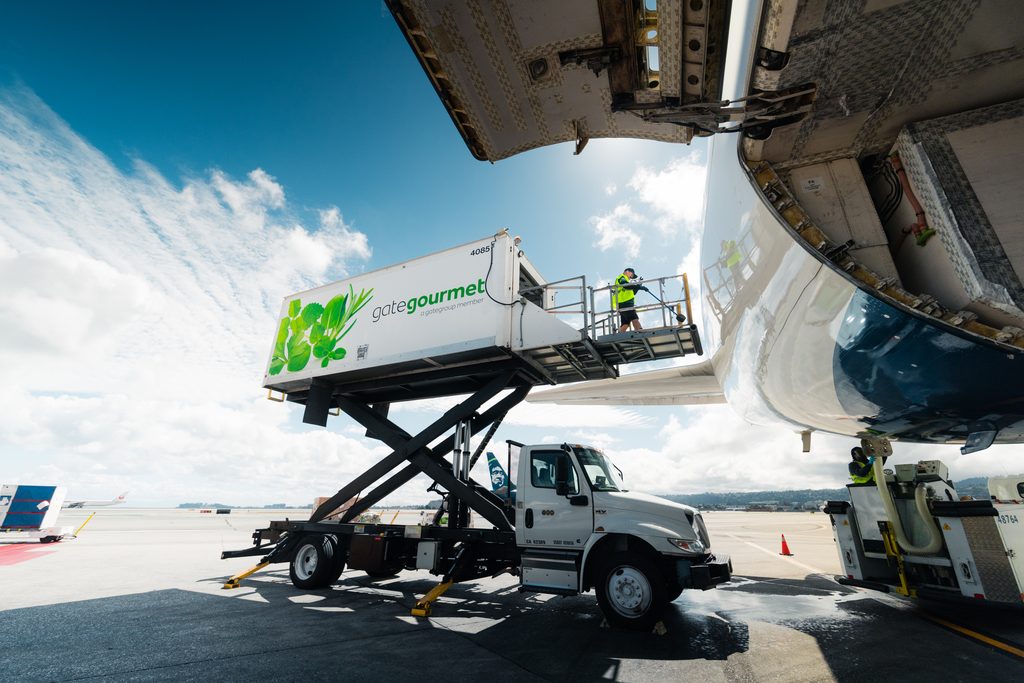
A digital promise has little value if the operation behind it cannot fulfil it. Personalisation must ultimately connect passenger intent with forecasting, sourcing, production, loading, crew information, and service delivery.
Aviation makes this particularly challenging because no single organization controls the entire journey. Airlines, airports, caterers, ground handlers, retailers, and technology partners each contribute different parts of the experience.
Passengers do not see those organisational boundaries. They simply notice whether the experience works.
For hospitality providers, technology therefore has a very practical purpose: to make service more relevant, reliable and human.
At its best, technology should almost disappear into the experience — removing repetitive tasks, giving teams the information they need and allowing frontline colleagues to focus on judgement, reassurance and genuine hospitality.
The new baseline for loyalty

The competitive question is no longer simply whether an airline offers a good app, an attractive lounge or a memorable meal.
It is whether those experiences recognise one another.
The brands that earn long-term loyalty will connect passenger intent with delivery: remembering a preference, communicating a change before it becomes a problem and making the next step clear without requiring the traveller to start again.
The future of passenger experience is not simply more digital. It is more coherent.
From the first search to the final service, every stage should feel like part of the same promise.
The seat will always matter. Increasingly, however, loyalty will be shaped by everything that connects the passenger to it — and by how effortlessly the journey continues after they leave it.